|
UNIST·삼성서울병원·부산대학교 공동연구팀, ZNF184 유전자의 역할 규명
고위험군 환자 선별 및 표적치료 적용을 위한 새로운 바이오마커 제시
국내 연구진이 소아에서 가장 흔하게 발생하는 혈액암인 급성림프모구백혈병(Acute Lymphoblastic Leukemia, ALL)의 예후를 악화시키는 핵심 유전자를 규명하고, 이를 활용한 새로운 정밀의료 전략의 가능성을 제시하였다.
UNIST 생명과학과 김홍태 교수 연구팀은 삼성서울병원 유건희 교수, 부산대학교 의과대학 김윤학 교수 연구팀과의 공동연구를 통해 전사인자 유전자인 ZNF184가 백혈병 세포의 DNA 복구 기능을 저해하여 질병 진행과 치료 저항성에 관여한다는 사실을 밝혔다.
연구 결과, ZNF184가 과발현된 백혈병 세포에서는 DNA 이중가닥 손상을 복구하는 상동재조합(Homologous Recombination) 경로가 정상적으로 작동하지 못하였다. 이로 인해 암세포는 유전적 불안정성이 증가한 상태에서도 생존하며 질병이 더욱 악화되는 것으로 나타났다. 실제 환자 데이터를 분석한 결과에서도 ZNF184 발현이 높은 환자군은 낮은 생존율을 보였으며, 치료 후 관해 상태에서는 발현량이 감소하고 재발 시 다시 증가하는 경향이 확인되었다.
연구팀은 이러한 특성을 활용하여 암세포만 선택적으로 제거하는 ‘합성치사(Synthetic Lethality)’ 치료 전략의 가능성을 제시하였다. DNA 단일가닥 손상 복구를 억제하는 표적항암제 올라파립(Olaparib)을 적용한 결과, ZNF184 과발현 백혈병 세포에서 항암 효과가 더욱 크게 나타났으며, 기존 항암제인 독소루비신(Doxorubicin)과 병용 시 치료 효과가 향상되는 것으로 확인되었다.
이번 연구는 급성림프모구백혈병의 고위험군 환자를 조기에 선별할 수 있는 새로운 바이오마커를 제시하였을 뿐 아니라, 암세포의 취약점을 표적으로 하는 맞춤형 정밀의료의 기반을 마련했다는 점에서 중요한 의미를 가진다. 연구 결과는 국제학술지 「Nucleic Acids Research」에 게재되었다.
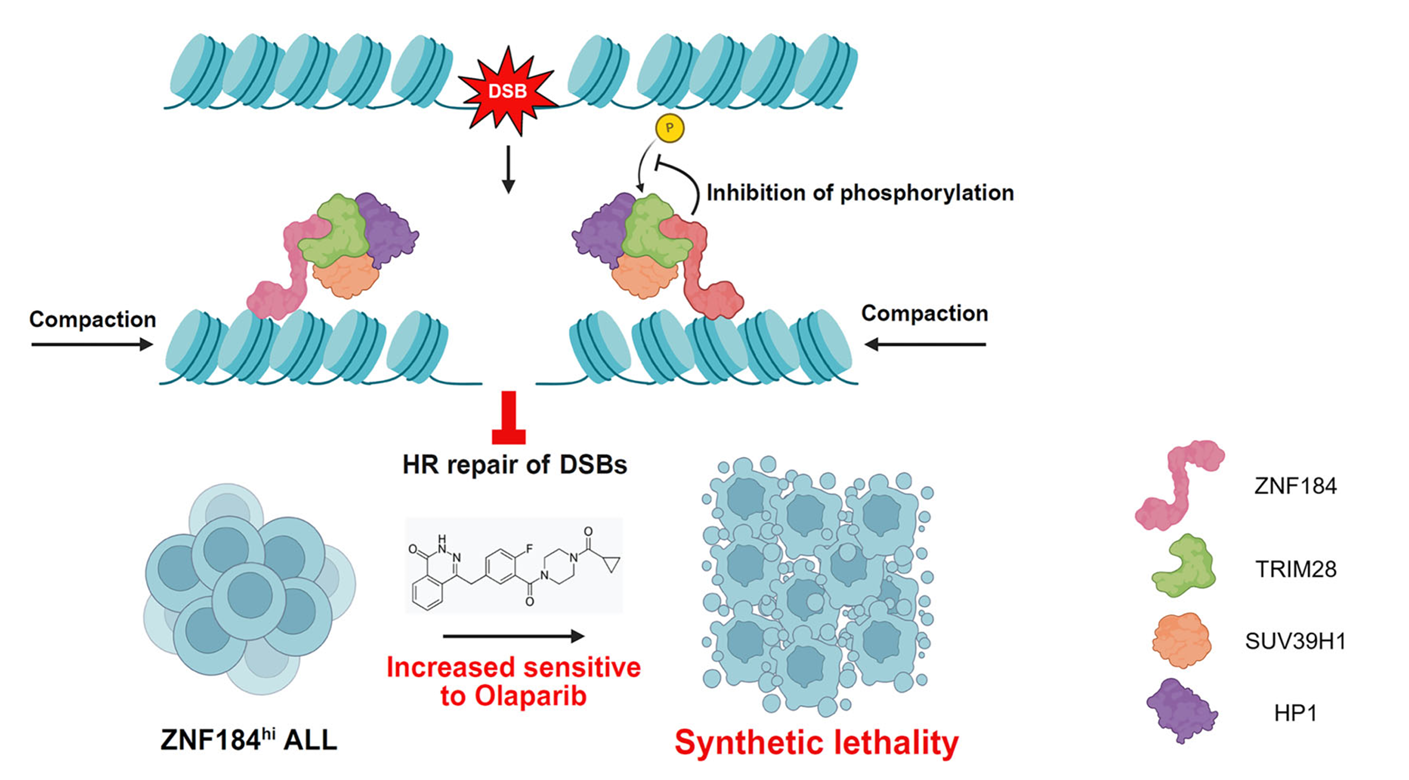
[ABSTRACT] Zinc finger proteins (ZNFs) are increasingly recognized as regulators of oncogenic transcriptional networks and DNA damage responses. Through integrative analysis of bulk and single-cell RNA sequencing data, we identified a conserved set of seven ZNF genes, including ZNF184, that are upregulated in acute lymphoblastic leukemia (ALL) and exhibit dynamic expression patterns linked to disease progression. Among these, ZNF184 uniquely localized to DNA double-strand breaks (DSBs) in a zinc finger domain-dependent manner. Functional analyses revealed that ZNF184 suppresses homologous recombination (HR)-mediated DNA repair by impeding BRCA1 recruitment, leading to accumulation of DNA damage. ZNF184 expression was elevated in primary ALL samples and associated with increased γH2AX levels and inferior overall survival in ALL patients. Loss of ZNF184 restored HR efficiency, reduced DNA damage burden, and enhanced genome st abilit y, while re-expression re-sensitized cells to DNA-damaging agents. Mechanistically, ZNF184 directly interacted with TRIM28 and facilitated its recruitment to DSBs, modulating TRIM28 phosphorylation and chromatin remodeling through the HP1/SUV39H1 complex. ZNF184 expression conferred heightened sensitivity to PARP inhibition and synergized with genotoxic chemotherapy in both cell lines and patient-derived ALL cells. These findings identify ZNF184 as a key modulator of DSB repair and a predictive biomarker for therapeutic strategies targeting HR-deficient ALL.
**reference : Nucleic Acids Res. 2026 May 20;54(10). ZNF184 negatively regulates HR repair and predicts poor prognosis in acute lymphoblastic leukemia **기사참조 : 동아사이언스
|